25 Creative Writing Prompts to Spark Ideas
Creative writing prompts are short ideas, questions, or situations that help writers begin creating without waiting for perfect inspiration. They can spark a story, poem, character, setting, or personal reflection. The best prompts provide enough direction to start while leaving room for your imagination, voice, and unexpected discoveries.

How Can Creative Writing Prompts Help You Write?
Creative writing prompts reduce the pressure of facing a blank page. Instead of asking yourself to invent everything at once, you begin with one image, question, emotion, or problem. That small starting point can lead to a complete scene or an idea you want to explore further.
Prompts are especially useful when you want to:
- Overcome writer’s block
- Practice writing regularly
- Develop stronger characters
- Explore new genres or points of view
- Turn personal observations into fiction or poetry
A prompt is not a rule. Treat it as a doorway. You can follow it closely, change one detail, or use only the feeling it creates.
25 Creative Writing Prompts to Try Today
Story and fiction prompts
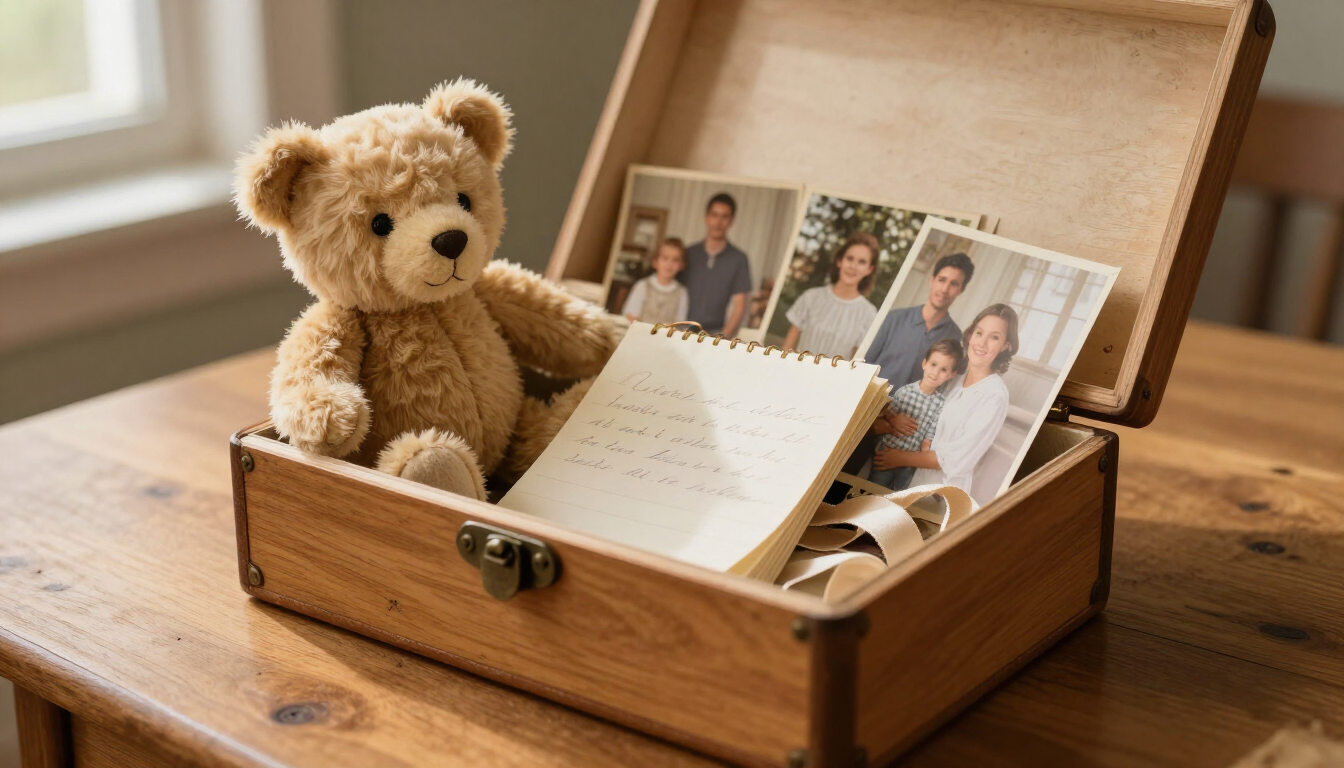
- A child discovers that their favorite stuffed animal remembers a conversation no one else heard.
- Write about a town where everyone receives the same dream on the same night.
- A character finds a letter addressed to them, written twenty years in the future.
- Two strangers reach for the last book on a library shelf. What happens next?
- A family tradition changes when one person quietly refuses to take part.
- Write a scene in which a character must tell the truth, but only through questions.
- Someone moves into a home where one room appears in a different place each morning.
- A friendship begins because two people mistake each other for someone else.
- Describe an ordinary object from the perspective of someone who believes it is magical.
- A character returns to a familiar place and realizes that everyone there remembers them differently.
Poetry and reflective prompts
- Write a poem about a sound you associate with safety.
- Describe grief without using the words “sad,” “loss,” or “goodbye.”
- Begin with the line: “The moon kept my secret.”
- Write a six-line poem in which each line begins with a different color.
- Compare a difficult decision to a room, road, weather pattern, or animal.
- Make a list of small things that helped you through a difficult day, then shape the list into a poem.
- Write about a forgotten place using only sensory details.
- Describe hope as if it were something you could hold in your hands.
Character and creativity prompts
- What does your character keep in a drawer and refuse to explain?
- Give a character a goal they believe will solve every problem. Show why they are wrong.
- Write a dialogue between your present self and your ten-year-old self.
- Create a character who is excellent at helping others but unable to ask for help.
- Describe a person through five objects they carry every day.
- Write a scene where a character lies for a kind reason.
- Let a character make a choice they cannot undo. Begin immediately after the decision.
How Do You Turn a Prompt Into a Complete Story?
A prompt becomes a story when a character wants something and encounters resistance. You do not need a complex plot at the beginning. Start with a simple chain of cause and effect:
- Choose a starting point. Select the prompt that creates the strongest image or question.
- Give someone a desire. Decide what the main character wants right now.
- Add an obstacle. Introduce a person, fear, secret, rule, or circumstance that gets in the way.
- Raise the stakes. Explain what could be lost if the character fails.
- Force a choice. Let the character act rather than simply observe.
- End with change. The character should understand, lose, gain, or question something by the final scene.
For example, the prompt about a future letter could become a story about a character who receives instructions from an older version of themselves. The central conflict might be whether to follow those instructions or protect the life they already have. The letter is only the beginning; the character’s decision creates the narrative.
A Simple Daily Writing Practice
You do not need hours of free time to build a writing habit. A focused fifteen-minute session can be enough. Choose one prompt, set a timer, and write continuously until it ends. Do not stop to edit sentences or research details.
Try this routine:
- Minute 1: Read the prompt and write the first image that comes to mind.
- Minutes 2–5: Introduce a person, place, or emotional tension.
- Minutes 6–12: Let the situation become more complicated.
- Minutes 13–15: End with a question, discovery, or decision.
If you miss a day, simply begin again. Consistency matters more than maintaining a perfect streak. You can also keep a small prompt journal and record unusual conversations, images, dreams, titles, and questions as future starting points.

What Should You Do When a Prompt Feels Difficult?
A difficult prompt does not necessarily mean it is a bad prompt. It may be pointing toward an unfamiliar subject, structure, or emotion. Before abandoning it, try changing the conditions.
- Change the point of view from first person to third person.
- Move the scene to a different time period or location.
- Make the main character older, younger, kinder, or less trustworthy.
- Replace the central object with something unexpected.
- Write the ending first, then work backward.
You can also write a deliberately poor version. Give yourself permission to be dramatic, awkward, predictable, or incomplete. A rough draft creates material to improve; a perfect idea that remains unwritten cannot do that.
How Can You Make Your Writing More Original?
Originality rarely comes from inventing something no one has ever imagined. It usually comes from combining familiar elements with your particular observations, language, and emotional perspective.
To deepen a prompt, ask:
- What detail would another writer overlook?
- What does the character misunderstand?
- What physical object represents the conflict?
- What would happen if the obvious choice were impossible?
- How can the setting influence the mood or decision?
Specific details make writing feel lived-in. Instead of saying that a room is comforting, describe the worn blanket, the uneven floorboard, or the familiar smell of paper and dust. Concrete details give readers something to see, hear, and remember.
A Quick Revision Checklist
After drafting, let the piece rest if possible. Then read it once for meaning and once for language. Use this checklist:
- Does the opening create a question, image, or tension?
- Does the main character want something clear?
- Does each paragraph move the idea forward?
- Are the strongest moments specific rather than general?
- Does the ending offer a change, discovery, or emotional echo?
You do not need to correct everything at once. Choose one area to strengthen, such as sharper dialogue or a more vivid setting, and make a focused revision.
Where Can Writers Find More Inspiration?
Inspiration is available in ordinary places: a walk, a family story, a forgotten photograph, a conversation overheard in a café, or an object with personal history. Keep collecting material without judging it too quickly. A detail that seems insignificant today may become the emotional center of a story later.
For more creative ideas and reflections on storytelling, explore the Luna & Pompon blog . You can also learn more about the heart behind these stories on the About page .
Final Takeaways
Creative writing prompts are practical starting points, not tests of talent. Choose one that creates curiosity, give a character a desire, and let an obstacle lead the writing forward. If a prompt feels intimidating, change its point of view, setting, or emotional focus. Write a rough draft before judging it, then revise one element at a time. Start with fifteen focused minutes today, save the ideas that surprise you, and return to the prompts that continue raising questions.
Recent Posts